
Pikliz Recipe from Haiti

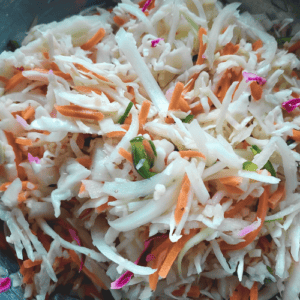
Pikliz is a spicy, tangy condiment made primarily from pickled cabbage, carrots, bell peppers, onions, and Scotch bonnet peppers, seasoned with vinegar and spices. It adds a burst of flavor to Haitian dishes, particularly fried foods like griot (fried pork) and fried plantains, yum!

Pikliz is often made in large batches and stored in jars, allowing it to be preserved for extended periods. Storing food is especially important for Haitians as they are often faced with food insecurity. We believe no child should go hungry. Our program in Haiti served over 10,000 meals to children in need last year. 

We hope you enjoy this delicious Haitian staple as much as we do and that it connects you in a deeper way with our extended Haitian family

Pikliz (Haiti)

Forward Edge International
Pikliz is typically used as a condiment on fried foods like griot (fried pork) and fried plantains, enhancing their taste and providing contrast with its acidity and heat. But honestly it's great on it's own as a summer side dish or when you need something crunchy with a bit of heat. Connect with our Haiti program by enjoying this recipe and learn how we're helping children in Haiti at www.forwardedge.org/haiti.
Prep Time 15 minutes
Cook Time 0 minutes
Course Side Dish
Servings 6

Ingredients
  

  • 1 cabbage
  • 2 carrots
  • 1 onion
  • 3 Scotch bonnet peppers or jalapeños
  • 4 garlic cloves
  • 2 tsp salt
  • 8 peppercorns
  • 1 cup white vinegar

Instructions
 

  • Cut the cabbage in half and using a shredder, shred one of the halves into a bowl.
  • Repeat the process for the carrots, onion, peppers, and garlic cloves.
  • Add the peppercorns, salt, and vinegar to the bowl. Mix all the ingredients thoroughly.
  • Transfer all the contents of the bowl including liquids into a large glass container and store in the refrigerator for at least 24 hours to allow the pickling process to complete.

Notes

Store in your refrigerator for up to three weeks.
Keyword condiment, crunchy, haiti, pikliz, slaw, spicey
post mission trip

Continuing Your Mission Back Home

I’m home from a life-changing mission trip. Now what? A short-term mission trip is an intense experience, in more ways than one. In the space of a week to 10 days, you’re immersed with a new group of people, develop a routine and learn new tasks and skills. You’ve also

Go to Blog »
community development

Why We Should Involve Children in Development

In his book, “Empowering Children”, former Forward Edge board member, Dr. Ravi Jayakaran, shares the importance of involving children in the process of their own development. When a community invests its resources in its children, it invests in its own future. Just as Forward Edge values all children and believes

Go to Blog »
community

Pilau Masala Recipe from Kenya

The rich flavors in Pilau Masala are a staple in Kenyan cooking, often mixed into rice. These flavors reflect Kenya’s diverse culinary landscape, showcasing a blend of indigenous African spices with those brought over by traders and settlers. We hope you enjoy this delectable spice mix as much as we

Go to Blog »
covid-19

Let the Wave Say Who We Are

Almost 20 years ago now, I was circling the 60-foot maple tree that stands just yards from my front door, talking to my Heavenly Father. Forward Edge needed to upgrade the training we provided for our short-term mission teams, and I was asking God for guidance. In a matter of

Go to Blog »
Transform a Child's Life Through Sponsorship

Ka wula (hello), my name is Monica

  • location

    Ghana

  • 18 yrs. old

    01-01-2008

Entered the program: May 2023

Monica lives with her mother and sister in a two-bedroom mud house roofed with sheet-metal. The community has electricity but no potable water. They must walk long distances to find water sources. Access to health care in the community is very poor; they have one clinic but no medication to offer. There is one primary and middle school but it has no furniture for the students. The main occupation is farming but many people in the community are unemployed and live on less than 1 dollar a day.

Monica comes from a Christian family. Her father died when she was very young and she never knew him. Her mother works as a small-hold farmer to prvide food for the family; she cultivates groundnuts but hardly harvests enough to take care of them. The family usually has two small meals a day, but sometimes they go a whole day without food. Providing funds for Monica and her sister to go to school is difficult without the support of Create Hope; additionally, the inability to afford sanitary supplies also keeps them home from school often.

Sponsorship Level What's this?

Three $38 sponsorships are needed to cover the complete holistic care of one child. Cover one, two, or three sponsorships.