Pikliz Recipe from Haiti

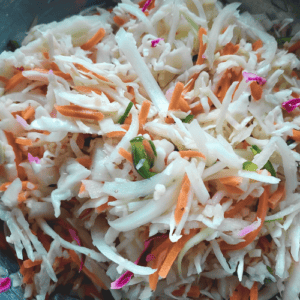
Pikliz is a spicy, tangy condiment made primarily from pickled cabbage, carrots, bell peppers, onions, and Scotch bonnet peppers, seasoned with vinegar and spices. It adds a burst of flavor to Haitian dishes, particularly fried foods like griot (fried pork) and fried plantains, yum!

Pikliz is often made in large batches and stored in jars, allowing it to be preserved for extended periods. Storing food is especially important for Haitians as they are often faced with food insecurity. We believe no child should go hungry. Our program in Haiti served over 10,000 meals to children in need last year. 

We hope you enjoy this delicious Haitian staple as much as we do and that it connects you in a deeper way with our extended Haitian family

Pikliz (Haiti)

Forward Edge International
Pikliz is typically used as a condiment on fried foods like griot (fried pork) and fried plantains, enhancing their taste and providing contrast with its acidity and heat. But honestly it's great on it's own as a summer side dish or when you need something crunchy with a bit of heat. Connect with our Haiti program by enjoying this recipe and learn how we're helping children in Haiti at www.forwardedge.org/haiti.
Prep Time 15 minutes
Cook Time 0 minutes
Course Side Dish
Servings 6

Ingredients
  

  • 1 cabbage
  • 2 carrots
  • 1 onion
  • 3 Scotch bonnet peppers or jalapeños
  • 4 garlic cloves
  • 2 tsp salt
  • 8 peppercorns
  • 1 cup white vinegar

Instructions
 

  • Cut the cabbage in half and using a shredder, shred one of the halves into a bowl.
  • Repeat the process for the carrots, onion, peppers, and garlic cloves.
  • Add the peppercorns, salt, and vinegar to the bowl. Mix all the ingredients thoroughly.
  • Transfer all the contents of the bowl including liquids into a large glass container and store in the refrigerator for at least 24 hours to allow the pickling process to complete.

Notes

Store in your refrigerator for up to three weeks.
Keyword condiment, crunchy, haiti, pikliz, slaw, spicey
Building Connections

Capturing Connection: Photography on the Mission Field

Photography is more than just a way to document your mission trip—it’s a bridge to connection, a chance to honor the stories of those you encounter. As you step into communities, camera in hand, pause to reflect. Are you capturing moments with care and respect? Are your photos fostering dignity rather than reducing people to subjects?

Go to Blog »
gospel

The Power of “Yes”

There is a word—or at least a series of decisions—that determine to a very great extent the story of our lives. In fact, if we fail to use this word and make those decisions, we will never experience the fullness of God’s plans for us. The word is “Yes.” One

Go to Blog »
living on mission

Living from Overflow

“Consider this: Whoever sows sparingly will also reap sparingly, and whoever sows generously will also reap generously. Each of you should give what you have decided in your heart to give, not reluctantly or under compulsion, for God loves a cheerful giver. And God is able to bless you abundantly,
Go to Blog »
community

Picadillo from Cuba

Picadillo has its origins in Spain, but it has been adapted and modified over the years by Cuban cooks to suit local tastes and ingredients. Picadillo is a versatile dish that can be made with various ingredients depending on regional preferences and what’s available. The base typically consists of ground

Go to Blog »
Transform a Child's Life Through Sponsorship

Miredita (hello), my name is Leona

  • location

    Kosova

  • 15 yrs. old

    10-17-2010

Entered the program: September 2023

Leona lives with her mother and brother in a one-bedroom apartment that they own. The family lived for many years in a rented apartment but the owner was always threatening to evict them as they couldn’t pay the rent regularly. Leona’s uncles and some cousins gathered enough money together to buy them the apartment they’re in now. Leona’s mom sleeps in the kitchen and she and her brother share the bedroom.

Leona's parents are divorced. Her dad visits sometimes and tries to bring food to help out. Leona’s mom tries to make some money sewing traditional clothing in the summer when there are tourists. She receives government assistance but it doesn’t even cover the utilities; her siblings try to help with money for food and firewood, and hand-me-down clothes for Leona and her brother.

Leona's brother, Theo, is also in the Corner Stone program.

Sponsorship Level What's this?

Three $38 sponsorships are needed to cover the complete holistic care of one child. Cover one, two, or three sponsorships.