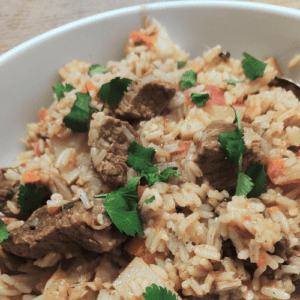

Pilau with Beef Recipe from Kenya

Pilau with beef is a traditional and iconic dish in Kenyan cuisine. It’s often served during special occasions and celebrations such as weddings, birthdays, and holidays. But we have found it to make for an amazing dinner any time of the week.

There is much to celebrate at our program in Kenya. Last year alone, we distributed over 126,000 meals to local children in need. These meals are keeping children in school, restoring families, and spreading the gospel. It’s amazing what God can do with a simple meal. 

Making this dish might not be such a life-changing experience for you, but it will be an opportunity to try some new flavors, experience Kenyan culture with your family, and could open up some great dinner table conversations.

We hope you enjoy this delicious dish and that it connects you in a deeper way with our extended Kenyan family. If you’d like to learn more about what our Christ-centered and holistic children’s program is doing in Kenya, you can do so here.

Pilau with Beef (Kenya)

Forward Edge International
Pilau with beef is a traditional and iconic dish in Kenyan cuisine, it's often served during special occasions and celebrations such as weddings, birthdays, and holidays. But we have found it to make for an amazing dinner any time of the week. Connect with our Kenya program by making this delicious dish and learn how we're helping children in Kenya at www.forwardedge.org/kenya.
Prep Time 20 minutes
Cook Time 1 hour
Course Main Course

Ingredients
  

  • 2 cups basmati rice
  • 5 medium potatoes, peeled and cut into quarters
  • 1/4 cup vegetable oil
  • 2 medium red onions, thinly sliced
  • 4 cloves garlic, minced
  • 2 Tbsp ginger, minced
  • 1 serrano chile, finely chopped
  • 1 Tbsp pilau masala (see recipe or purchase on Amazon or specialty store)
  • 2 beef stock cubes
  • 1/4 cup fresh cilantro, roughly chopped
  • 1 pound beef sirloin, cubed
  • 3 roma tomatoes, diced
  • 4 cups water
  • 2 bay leaves
  • salt to taste

Instructions
 

  • Heat a stockpot on medium-high heat. Add oil and heat until hot but not smoking.
  • Add the sliced onions and fry for 10-15 minutes or until the onions start to turn golden brown (be careful not to burn).
  • Add the garlic, ginger, serrano pepper, and cook for 1-2 minutes, until fragrant.
  • Add the cubed beef, pilau masala, beef stock cubes, bay leaves, cilantro, and salt to taste. Cook until the meat browns and caramelizes, stirring occasionally, about 8 to 10 minutes.
  • Add the diced tomatoes and cook for 4-5 minutes, until the tomatoes have released their liquid.
  • Stir in the potatoes and the water. Bring to a boil and cook for 10 minutes.
  • Stir in the rice, and cover tightly with foil (to keep the steam in). Reduce the heat to low and cook for 20 minutes, until the rice is cooked and the liquid is absorbed.
  • Once the rice is dry, remove the foil and fluff with a fork to ensure the seasonings are well distributed throughout the rice.

Notes

You can substitute chicken and chicken stock for the beef and beef stock cubes. You can substitute beef stock for the water and cubes. This dish is great as leftovers -- making ahead and reheating will only increase the flavor.
Keyword beef, dinner, flavorful, kenya, pilau, rice, savory, traditional
community

Pilau Masala Recipe from Kenya

The rich flavors in Pilau Masala are a staple in Kenyan cooking, often mixed into rice. These flavors reflect Kenya’s diverse culinary landscape, showcasing a blend of indigenous African spices with those brought over by traders and settlers. We hope you enjoy this delectable spice mix as much as we

Go to Blog »
community

Banana Bread Recipe from Ghana

Most everyone has made banana bread at one time or another. In fact, you may already have your favorite banana bread recipe. Maybe you like it more moist, maybe you like it with walnuts… but chances are you haven’t tried a banana bread recipe from Ghana! Bananas are an important

Go to Blog »
joseph anfuso

Serendestiny During a Pandemic

If there’s one thing the Covid-19 pandemic has made abundantly clear it’s that none of us are fully in control of our lives. What we can control, though, are our choices. And those choices ultimately determine the story of our lives. Several years ago, I coined a word that conveys

Go to Blog »
child sponsorship

Why Can’t I Instant Message My Sponsored Child?

1.86 billion people log into their Facebook account at least once a month–that’s almost 1/4 of the total global population! This number doesn’t even include other outlets like Instagram, Twitter, and Snapchat. People in developing countries are no exception to this global trend, and chances are, the child you sponsor has

Go to Blog »

Pikliz Recipe from Haiti

Pikliz is a spicy, tangy condiment made primarily from pickled cabbage, carrots, bell peppers, onions, and Scotch bonnet peppers, seasoned with vinegar and spices. It

Read More »
Transform a Child's Life Through Sponsorship

Ka wula (hello), my name is Comfort

  • location

    Ghana

  • 21 yrs. old

    08-10-2004

Entered the program: March 2023

Comfort lives with her mother in a house built with mud and roofed with thatch. They have no access to potable water. There is no piped water in the village so the women and girls in the community fetch water from a local dam; once it dries up, they have to walk very long distances to find other sources. This affect their availability to work and attend school regularly.

Comfort’s family is Christian. She lost the father at an early age and her mother is a housewife with no source of income. Before Create Hope, they lived on less than $1 a day and usually one meal a day. Joining the program has enabled her to attend school and have a bicycle to take her the 5 miles each way, every day. As with many girls her age, Comfort misses school when she is having her monthly cycle because she cannot afford to buy a sanitary supplies.

Sponsorship Level What's this?

Three $38 sponsorships are needed to cover the complete holistic care of one child. Cover one, two, or three sponsorships.